
Sector Challenges
Building Better Plant-Based Products
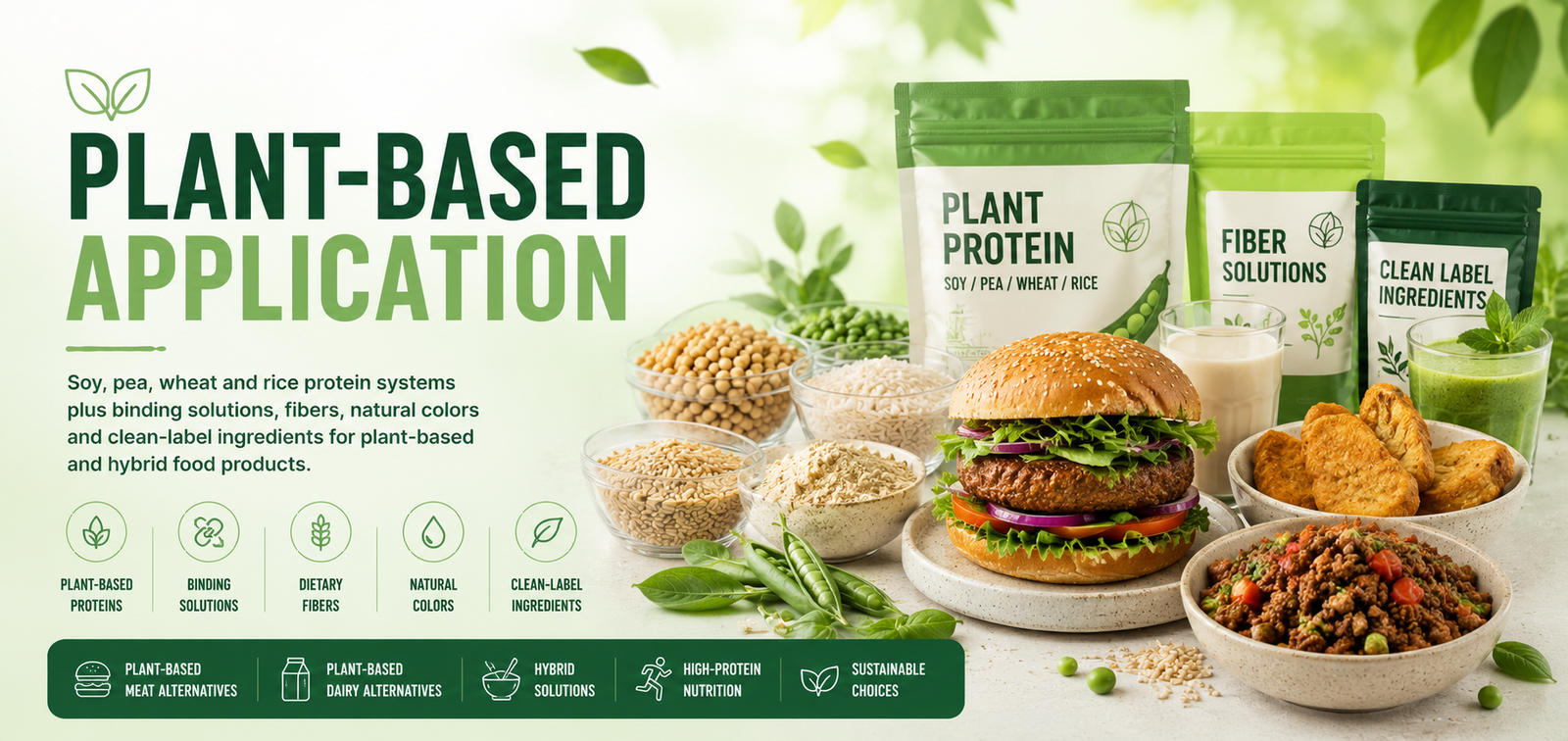
The plant-based category is moving from novelty to mainstream — and consumers expect parity on taste, texture and label transparency. That means ingredient selection has never mattered more.
- Authentic meat-like texture in plant-based proteins
- Clean dairy mouthfeel in plant-milks and yogurts
- Binding, juiciness and process tolerance in patties
- Clean-label ingredient lists without E-numbers
- Cost-competitive formulations versus animal-based
Ravelin Solutions
The Complete Plant-Based Toolkit
Plant Proteins
TVP, Soy Isolate, Pea Protein, Vital Wheat Gluten, Rice Protein for meat analogues and beverages.
Binding Systems
Methylcellulose, Konjac, Sodium Alginate, Carrageenan for cohesion and process tolerance.
Clean Label Fibers
High-purity Bamboo, Oat, Wheat fiber for fat replacement and clean-label texture.
Natural Colors
Beetroot, Red Yeast Rice, Paprika for cooked-meat appearance in plant analogues.
Emulsifiers
Soy Lecithin, GMS, Polysorbate for stable emulsions and structure.
Flavor Enhancers
Yeast extracts, HVP for meaty, savory flavor profiles in plant-based products.
Applications
Plant-Based Categories We Support
Plant-Based Meat
Patties, sausages, nuggets, kebabs.
Dairy Alternatives
Plant milks, yogurts, cheeses, ice cream.
Hybrid Products
Meat-plant blends, dairy-plant hybrids.
Sports & Nutrition
Protein bars, RTD beverages, powders.